Zero Buzz. Full Flavour.

Top bartenders have risen to the challenge of pairing non-alcoholic drinks to tasting menus.
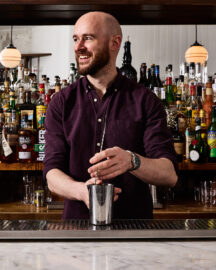
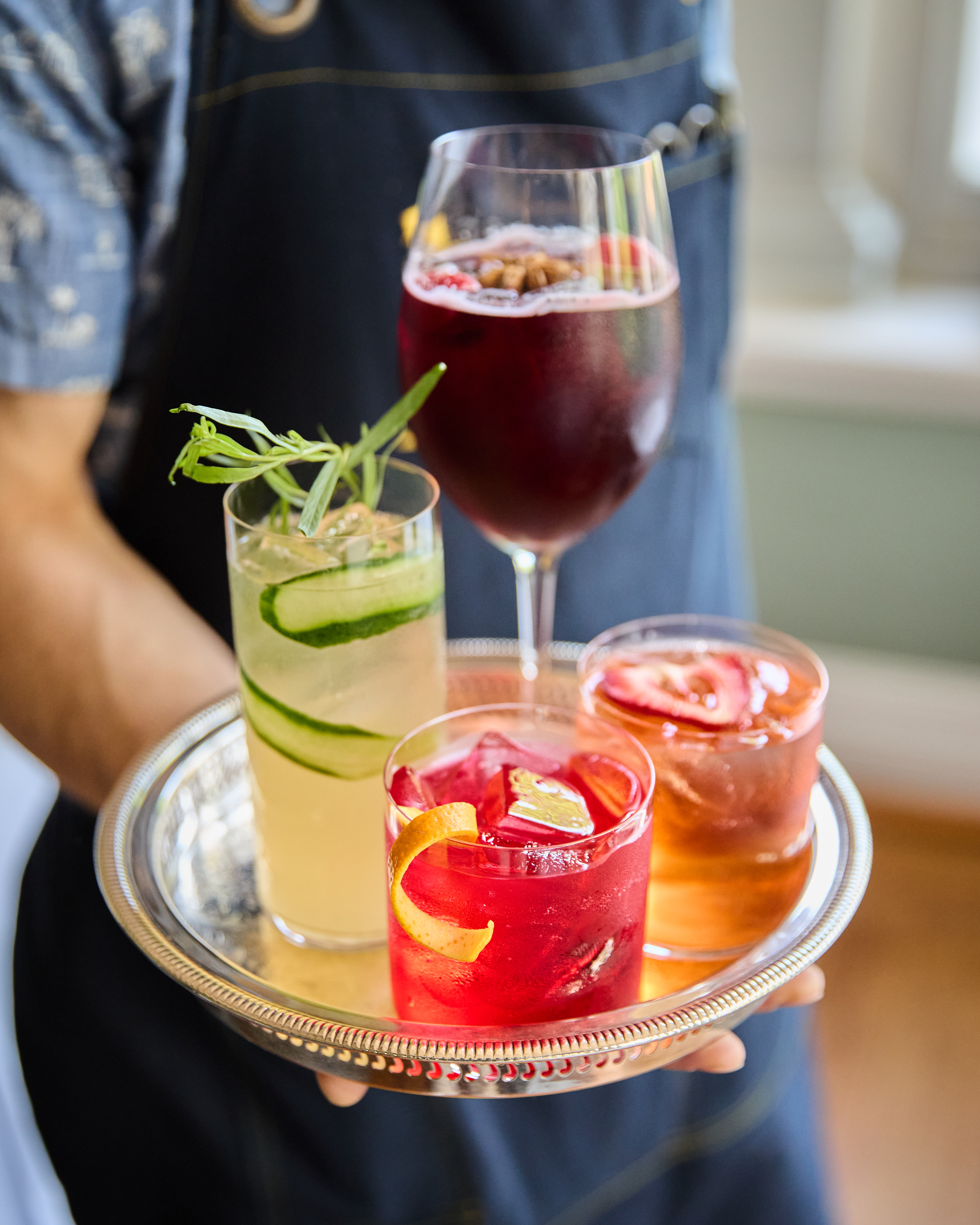
Before coming to Langdon Hall Country House Hotel five years ago as head bartender, Nathaniel Manns could count on one hand the number of zero-alcohol cocktails he had made. That has changed dramatically. The list of highly imaginative, spirit-free drinksserved in the hotel’s bar—all of them drawing heavily on plants from the garden on-site—are in high demand, alongside no-alc beers and wines. “I see it more and more,” says Manns. “It’s becoming socially normal to not drink alcohol.”
Not just normal. It can also be eminently satisfying and frequently revelatory, especially when taken to its maximum expression—pairing non-alcoholic cocktails to a tasting menu, an increasingly common place offer that is attaining new levels of complexity and thoughtfulness. At Langdon Hall, Manns works closely with the hotel’s sommeliers.“We try to take into account the mindset behind the way wines are chosen,” he says, “looking at acidity, richness, sugar content and effervescence, then apply that to our non-alcoholic cocktails.”
Nick Chindamo, head forager and fermenter at P.E.I.’s Inn at Bay Fortune, often takes a similar approach. He is in charge of the Inn’s alcohol-free program, and many of his concoctions are designed to imitate wine. For example, an infusion of red fruit juice with burnt oak comes close to a bold Cabernet. “And we do a lot of fermentation,” he notes, “with both wild and farmed products, which gives us more ingredients to play with. ”Sometimes he comes at the challenge from a different direction, making matches based on a plant’s family—he might use coneflowers in a cocktail to go with sunchokes on the plate. The connection can even highlight the story of an ingredient as much as its taste. “For a tomato dish, I would integrate the flavour of marigold into the drink. We grow them between the tomato plants. This brings the guests deeper into the farm experience.”
You might think this gives a rural restaurant a serious advantage over an urban establishment. Not always. At Azura, in Toronto, customers are invited to visit the covered patio garden behind the restaurant—a source of inspiration and ingredients for both the kitchen and the cocktail program. Chef Adam Ryan offers no à la carte, just a blind-tasting menu of 10 to 15 courses that changes nightly. Co-owner and wine director Joshua Mottpairs beverages to each dish, including no-alcohol cocktail options. “Chef’s approach to food is entirely Canadian-focused, ”says Mott. “He ferments almost everything that comes in and makes full use of our garden. We all collaborate with him daily, coming up with new ideas. Today, we picked sumac for a tonic to use as a base for drinks.”
Creating a cocktail that is precisely tailored to a specific dish can be easier than finding a perfect wine match, but there are challenges. “Incorporating tannin is so easy with wine, ”explains Mott, “but it’s a problem with alcohol-free cocktails. Fortunately, we have a great connection with Spirit Tree ciders. I often use their Sparkling Apple Cider to bring tannic structure into a drink.”
Culinary fermentation plays a useful role in many no-alcohol programs; it takes centre stage at Antheia, chef Briana Kim’s new Ottawa restaurant. Following the tradition of Japanese sake makers, she has constructed a cedar-lined walk-in muro dedicated to fermentation—an incubator room with precisely controlled temperature and humidity. In it, she ferments drinks alongside her sauces, often with the same yeasts and spores. “When a guest tastes the pairing, the food and the drink are already in harmony, ”she says. “Just as Burgundy complements coq au vin because it’s woven into the dish, our beverages often echo what’s on the plate. ”Pairing, she believes, isn’t only about brightness or acidity. “Fermented non-alcoholic drinks can carry tannins, texture, umami and depth—qualities more often associated with wine. Each glass follows the same arc as the food, creating a single, connected story.”
Which is what anyone who orders a paired tasting menu is seeking. With more and more bartenders, sommeliers and chefs teaming up to take alcohol out of the creative equation, teetotal customers no longer feel relegated to a second tier. Sometimes they’re having the most exciting experience in the room.
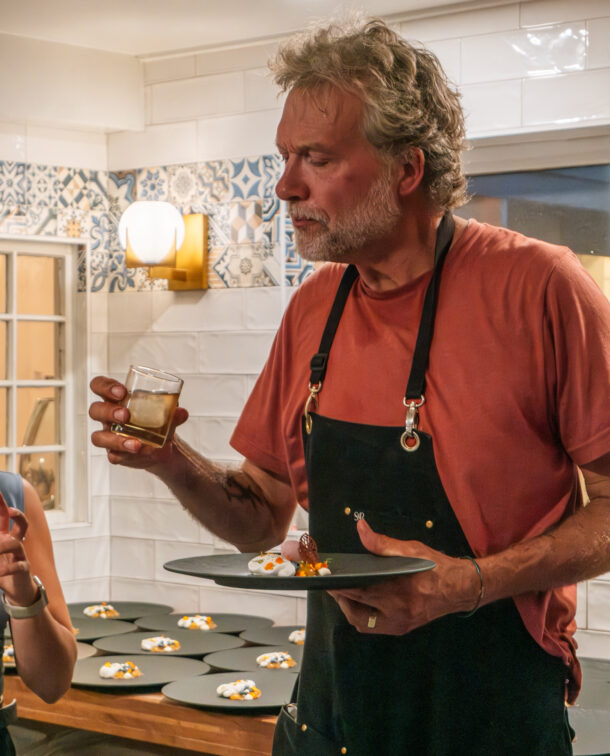 Inn at Bay Fortune owner/chef Michael Smith tasting a new juice | Photo: Carly Boertien
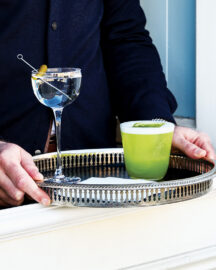
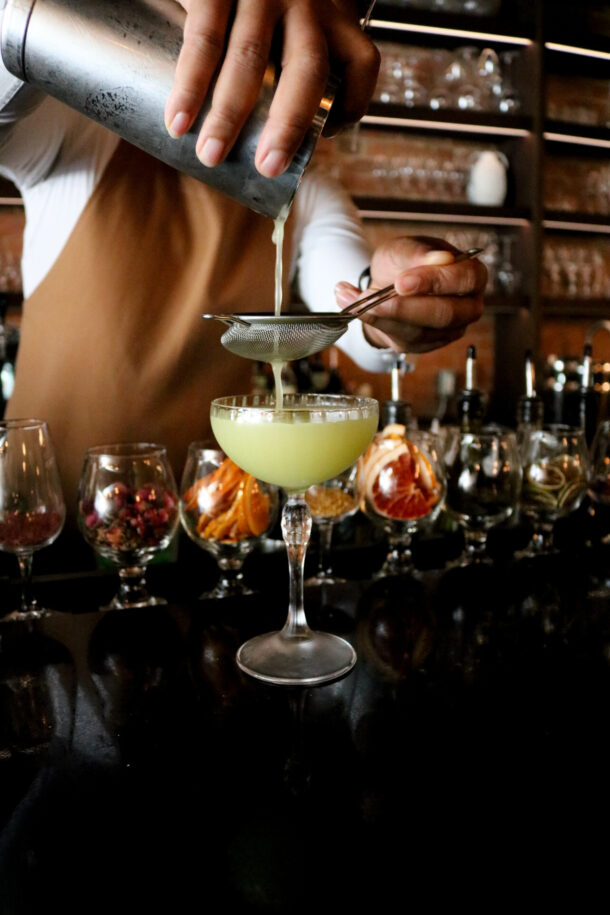 Non-alcoholic cocktail pouring at Azura | Photo: Brittany Olsen
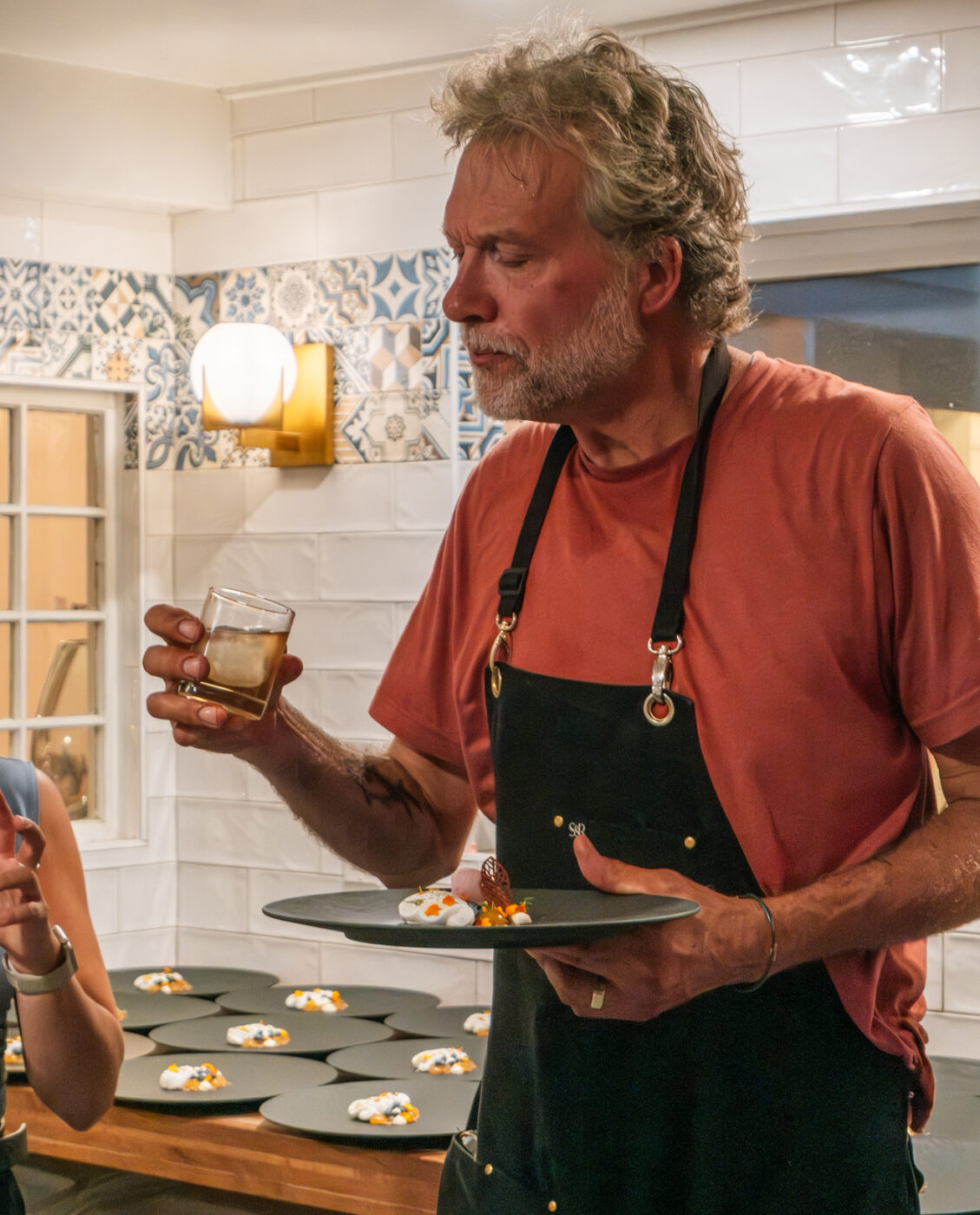
Inn at Bay Fortune owner/chef Michael Smith tasting a new juice | Photo: Carly Boertien
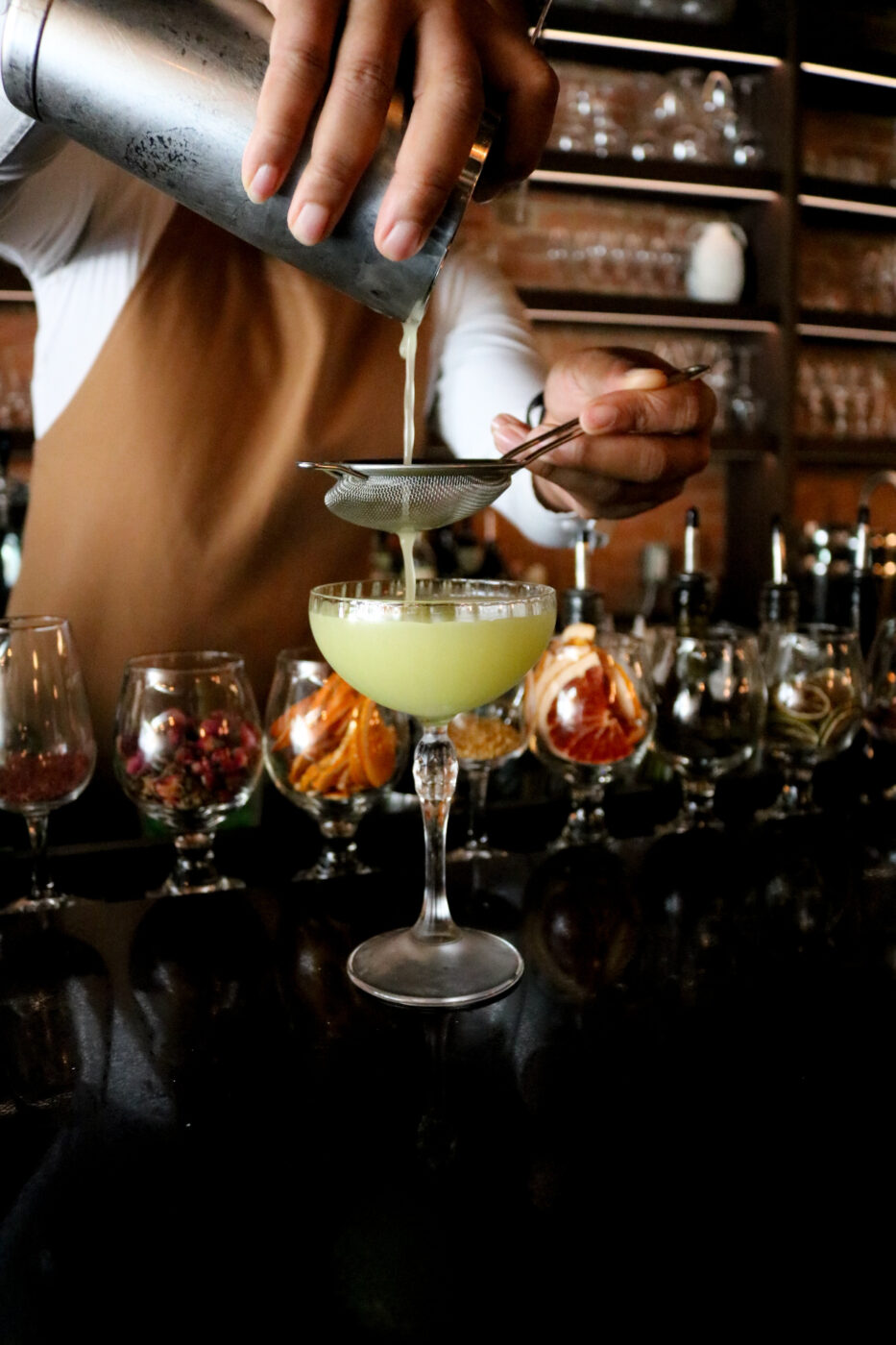
Non-alcoholic cocktail pouring at Azura | Photo: Brittany Olsen
There are many ways—and reasons—to dine well without alcohol. At Naagan, in Owen Sound, owner-chef Zach Keeshig’s mandate is to be as true to Indigenous heritage as possible. He doesn’t serve any alcohol at all.
“There was no tradition of alcohol in Indigenous communities, ”he points out. “That arrived with the early settlers. ”Instead, he uses ingredients like sweet cedar, chicory and wild ginger in his creations. And he’s been pleasantly surprised by the lack of pushback from customers; once informed of his mission, they embrace it. Keeshig understands the importance of building flavour with ferments and wild foods—that’s how he grew up, after all—but his background in fine dining doesn’t hurt either. A stint at Restaurant Pearl Morissette in Niagara proved inspiring. “I’ve always been interested in non-alc, but I learned a lot from their program and I adapted it to my style of food.
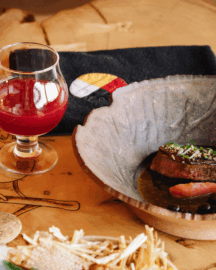
He serves a cocktail of redcurrant juice and spruce tea with pigeon, which he often slow cooks over charcoal and birch. Pickerel is paired with a lemonade of homegrown lemongrass spiked with tart gooseberries. “During our snack courses, we go a little more traditional and pour cedar tea sweetened with maple.”
 Zach Keeshig pairs redcurrant with pigeon smoked over birch | Photo: French Touch By V
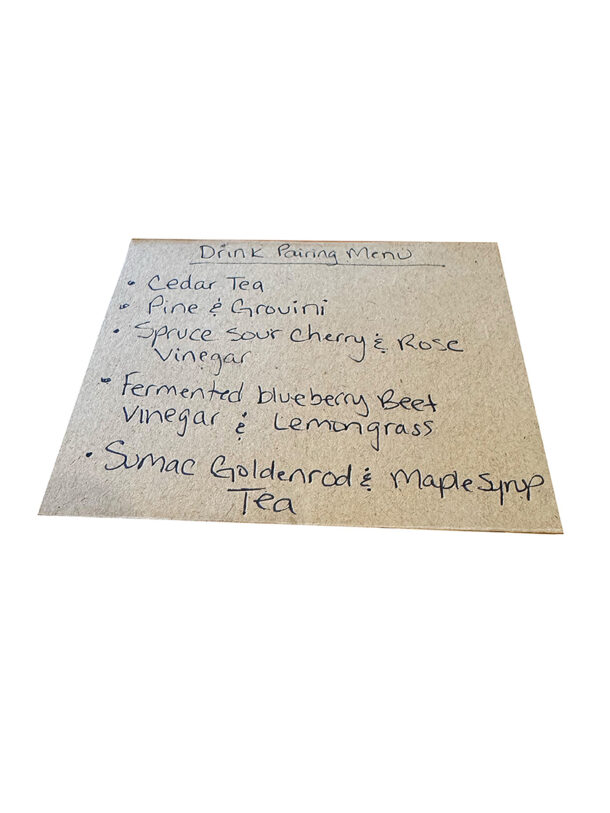 Naagan Dining drink pairing menu | Photo: Dick Snyder
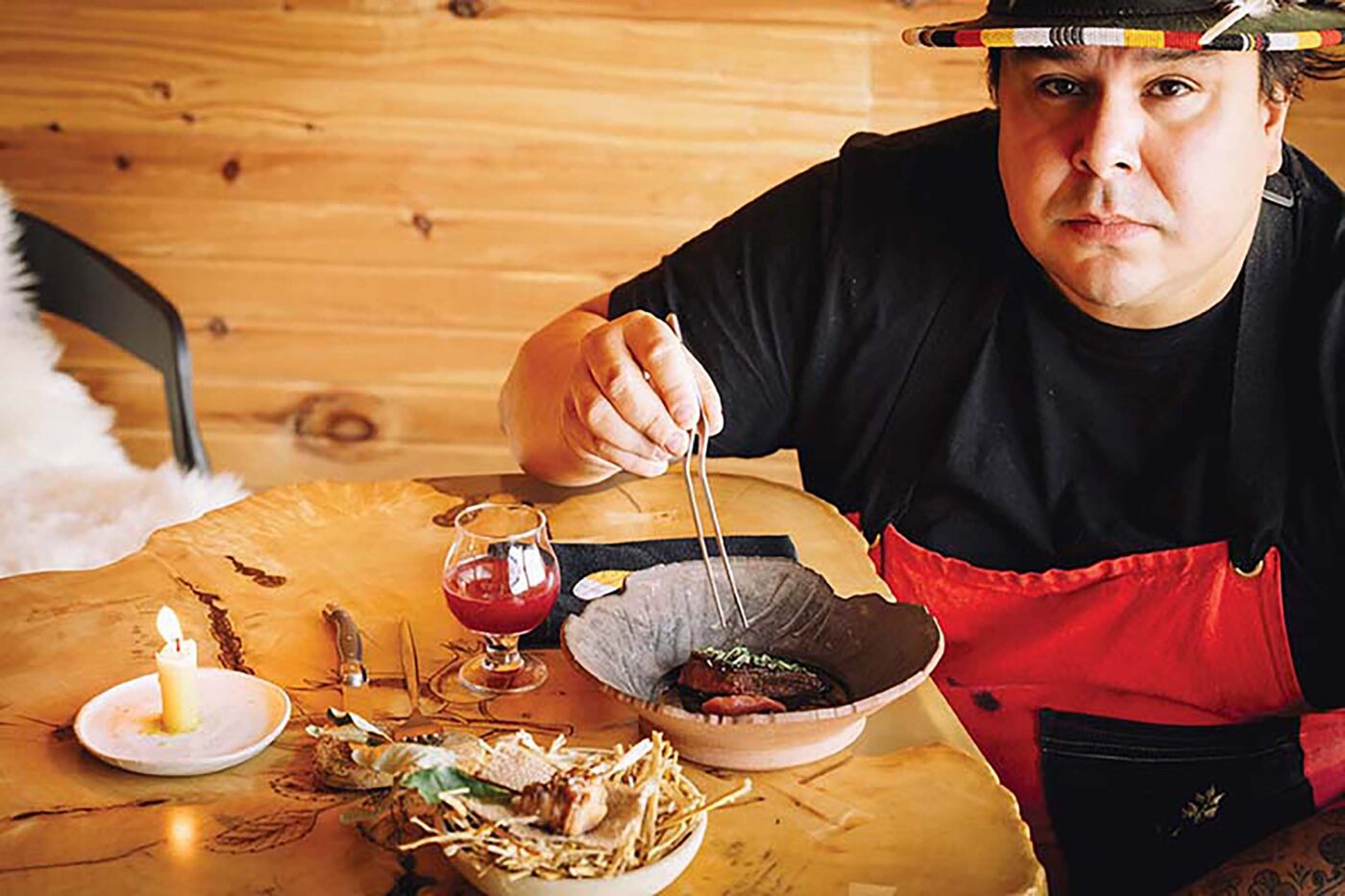
Zach Keeshig pairs redcurrant with pigeon smoked over birch | Photo: French Touch By V
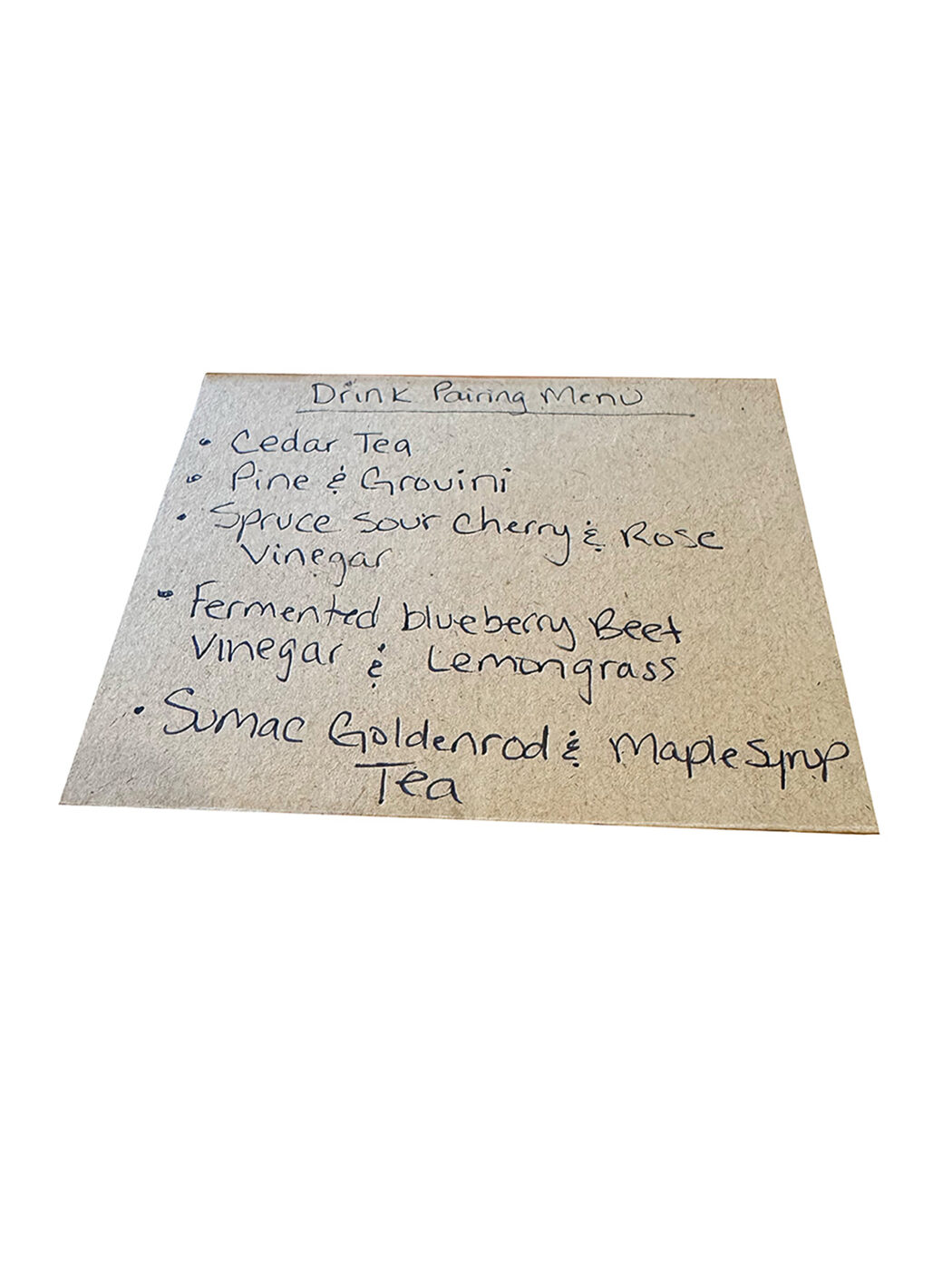
Naagan Dining drink pairing menu | Photo: Dick Snyder
Sober-curious? Try out this recipe from Zach Keeshig:
Anise Hyssop & Sea Buckthorn (serves one)
Ingredients:
• 1 oz sea buckthorn berries plus a few for garnish
• 5-6 fresh hyssop leaves
• hyssop flowers
• 1/2 oz Magnolia syrup or unpasteurized honey
• ice
• Chilled San Pellegrino
• Lime wedge
• Vancouver Island sea salt
• Plain tumbler glass
To mix:
• Using a sliced wedge of lime, rim the glass with some of the lime juice, then dip the moistened end in some Vancouver Island sea salt. In the bottom of the glass, add the sea buckthorn, hyssop, simple syrup and muddle, releasing the juice and bruising the leaves. Fill the glass with ice and top with chilled San Pellegrino. Garnish with a few sea buckthorn berries and hyssop flowers.
— Ivy Knight